Производство шкафов-купе in 2024: what's changed and what works
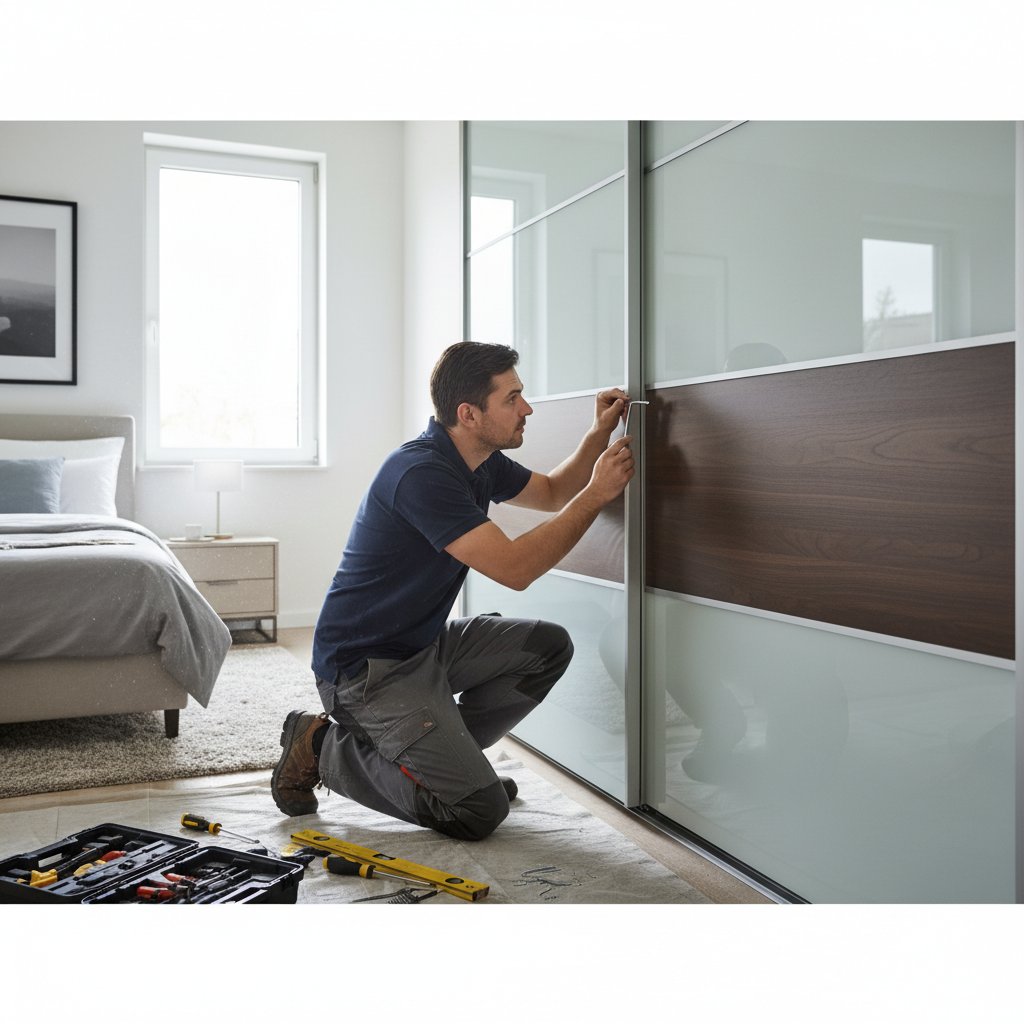
Sliding wardrobe manufacturing has gone through some serious evolution lately. If you're running a cabinet shop or thinking about diving into this niche, 2024 has brought changes that are impossible to ignore. Some old-school methods still hold their ground, while new tech and customer expectations have flipped the game in unexpected ways.
Here's what's actually working right now in the sliding wardrobe business, based on what's happening in workshops from Moscow to Vladivostok.
7 Game-Changing Shifts in Sliding Wardrobe Manufacturing This Year
1. CNC Machines Have Become Stupidly Affordable
Remember when a decent CNC setup would set you back 3-5 million rubles? Those days are history. Entry-level machines now start around 800,000 rubles, and they're good enough for most small to medium operations. Chinese manufacturers like Jinan and Weihong have flooded the market with reliable options that won't bankrupt you.
The real shift isn't just the price drop—it's the software. Modern control systems are actually intuitive now. Your operator doesn't need a PhD in programming anymore. Most workshops report their team gets comfortable with basic operations within two weeks, not two months. This means you can scale faster without hunting for unicorn employees who know both woodworking and coding.
The payoff is tangible: shops running CNC report cutting material waste from around 12-15% down to 4-6%. When you're processing 50-70 wardrobes monthly, that waste reduction pays for the machine in roughly 18 months.
2. Customers Want Their Wardrobes Yesterday
The standard 3-4 week production timeline? Clients are pushing back hard on that. Online furniture retailers have trained people to expect speed, and custom wardrobe makers are feeling the pressure. Shops offering 10-14 day turnarounds are snatching orders left and right, even at slightly higher prices.
Smart manufacturers are splitting production into modules. Instead of building everything from scratch for each order, they're pre-cutting standard carcass sizes (2000mm, 2200mm, 2400mm heights) during slow periods. When an order comes in, they're just customizing internals and facades. It's not full mass production, but it's not pure custom either—and it works.
3. Eco-Friendly Materials Are No Longer Optional
E0 and E0.5 emission class boards have moved from "nice to have" to "must have" in major cities. Clients specifically ask about formaldehyde levels now, especially families with kids. Manufacturers stuck offering only E1 class materials are losing deals to competitors who stock low-emission alternatives.
Yes, E0 laminated particleboard costs about 15-20% more than E1. But here's the thing: you can charge 25-30% more for "eco-friendly" wardrobes, and customers will pay it. The margin actually improves. Plus, you're not dealing with health concerns or potential complaints down the line.
4. DIY Assembly Instructions Make or Break Reviews
This sounds minor until you check your review ratings. Wardrobes that arrive with confusing assembly guides get hammered online, even if the product itself is solid. Clear, visual instructions—preferably with QR codes linking to assembly videos—are now standard among top-rated manufacturers.
Some shops are going further: they're including pre-assembled frame sections that snap together. The customer still gets the "custom" wardrobe experience and saves on installation costs, but assembly time drops from 4-5 hours to about 90 minutes. Fewer angry calls, better reviews, more referrals.
5. Integrated LED Lighting Is Standard, Not Premium
LED strips cost pennies now—literally 150-200 rubles per meter for decent quality. Including motion-sensor lighting in every wardrobe adds maybe 1,500-2,000 rubles to your costs, but it makes the product feel premium. Customers notice it immediately during showroom visits.
The smart move is building it into your base price rather than offering it as an add-on. When competitors charge 5,000-7,000 rubles extra for lighting and you include it standard, guess who gets the order? This tiny detail closes deals surprisingly often.
6. Direct-to-Consumer Sales Are Eating Dealer Networks
Furniture dealers used to be essential. Now? They're increasingly optional. Manufacturers with decent Instagram presence and basic websites are getting 40-60% of their orders directly from end customers. The 30-40% margin you'd normally give to dealers stays in your pocket.
The catch is you need to handle consultations, measurements, and customer service yourself. But tools like WhatsApp Business and simple CRM systems make this manageable even for shops producing 30-40 units monthly. One manufacturer in Kazan reported their direct sales jumped from 20% to 55% of revenue just by posting regular project photos and responding to DMs within an hour.
7. Modular Internal Systems Beat Custom Every Time
Fully custom internal configurations sound great in theory. In practice, they're a nightmare to manufacture and install. The winning approach in 2024 is offering modular systems based on 50mm or 100mm increments. Customers still get to "customize" their storage, but everything snaps to a grid.
This standardization cuts production time roughly in half and nearly eliminates measurement errors during installation. IKEA figured this out decades ago, but custom wardrobe makers are finally catching on. Clients get 90% of the flexibility they want with none of the headaches.
The wardrobe manufacturing landscape has shifted hard toward speed, simplicity, and smart standardization. The shops thriving right now aren't necessarily the ones with the fanciest equipment or the biggest showrooms. They're the ones who've figured out how to deliver what feels custom while running efficient, repeatable processes behind the scenes. That balance—between personalization and production efficiency—is where the money lives in 2024.